
A walking stick looks like the simplest mobility aid there is — but choose the wrong one and it can leave you leaning awkwardly, straining your wrist, or not getting the support you actually need. Choose the right one and it quietly gives you back confidence on every trip to the shops, walk in the park, or move around the house. This guide walks you through the choice in plain terms: which type suits you, how to get the height right, and when a stick isn’t quite enough.
First: is a stick the right aid at all?
A walking stick suits you if you need light support on one side — a steadying hand for balance, mild weakness, or joint pain. If you find yourself wanting to lean real weight through both arms, or you feel unsteady even with a stick, you’ll be safer with a walking frame or rollator instead. Our guide to Zimmer frames and rollators explains the difference, and if you’re recovering from surgery and need support on both sides, see our guide to using crutches.
The three main types of walking stick
1. Standard adjustable walking stick
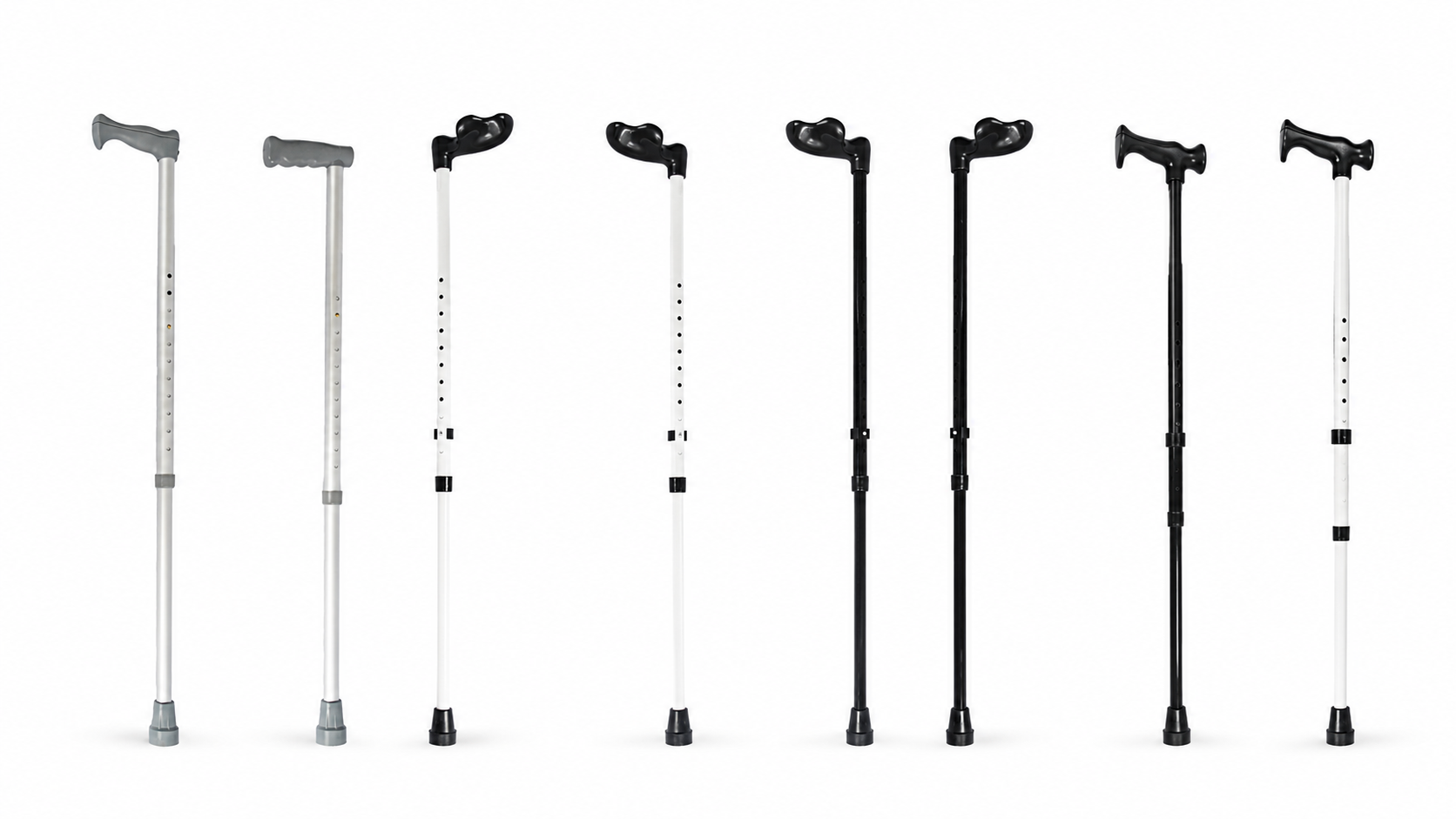
The everyday choice. A lightweight aluminium stick with a comfortable handle and push-button height adjustment covers most needs — general balance, a bit of reassurance on uneven ground, or support for a mildly painful hip or knee. Our height-adjustable aluminium walking stick weighs just 550 g, adjusts to suit most adults, and supports up to 127 kg (20 stone). If you simply need a dependable stick, start here.
2. Ergonomic (Fischer-style) handle stick
If you have arthritis, a weak grip, or pain in your hand or wrist, the handle matters more than the stick. A Fischer-style handle is anatomically shaped to spread your weight across the whole palm rather than concentrating it in a narrow bar — which makes a remarkable difference over a day’s use. Ours comes in silver and black, with the same lightweight adjustable shaft as our standard stick.
3. Quad cane (four-point stick)
A quad cane has a four-footed base, which does two important things: it gives noticeably more stability than a single tip, and it stands up by itself — no more hunting for somewhere to lean it when you need both hands. Quad canes are the usual recommendation after a stroke or for anyone with one-sided weakness or balance difficulties, because the wide base catches small wobbles a normal stick can’t. Browse more aids for one-sided weakness in our stroke recovery collection.
Getting the height right
This is the step most people skip, and it’s why so many sticks feel wrong. Stand naturally in your usual shoes with your arms relaxed at your sides, and have someone measure from the crease of your wrist to the floor — that measurement is your ideal stick height. Set correctly, your elbow should have a slight bend (around 15 degrees) when the stick is planted beside you. Too tall and you’ll hitch your shoulder; too short and you’ll stoop. All of our sticks adjust with a simple push-button, so you can fine-tune at home and re-adjust if you change footwear.
Which hand should hold the stick?
It surprises most people: the stick goes in the hand opposite your weaker or painful side. If your right knee is the problem, hold the stick in your left hand — it moves forward together with your right leg, sharing the load the way your body naturally walks. It can feel odd for the first day; it quickly becomes second nature and protects your gait.
Look after the ferrule
The rubber tip (ferrule) is your grip on the ground, and it wears like a tyre. Check it every few months — if the tread is smooth or the rubber has hardened, replace it before it lets you down on a wet pavement. It’s a pence-not-pounds part that makes the single biggest difference to safety.
Quick answers
Can I buy a walking stick VAT-free? Yes — if you have a long-term illness or disability you can usually claim VAT relief with a short declaration at checkout.
Wood or aluminium? Aluminium is lighter, height-adjustable and more durable day to day. Traditional wooden sticks must be cut to length and can’t be adjusted afterwards.
How much weight can a stick take? Our aluminium sticks support up to 127 kg (20 stone) — but remember a stick is for steadying, not for taking your full weight. If you need more, consider a frame or rollator.
Our walking sticks
The three types above, all height adjustable, eligible for VAT relief and with free UK delivery on orders over £15.
 Aluminium Walking StickStandard — the everyday choice, 550 g£7.25View
 Fischer Stick — SilverFischer handle — kinder on arthritic hands£8.50View
 Fischer Stick — BlackSame handle, in a darker finish£8.50View
 Aluminium Quad CaneQuad cane — stands alone, most stable£15.99View
Still unsure? Browse the full walking sticks collection, or call our friendly UK team on 01531 635678 — we’ve been helping people stay independent since 1965.
Share:
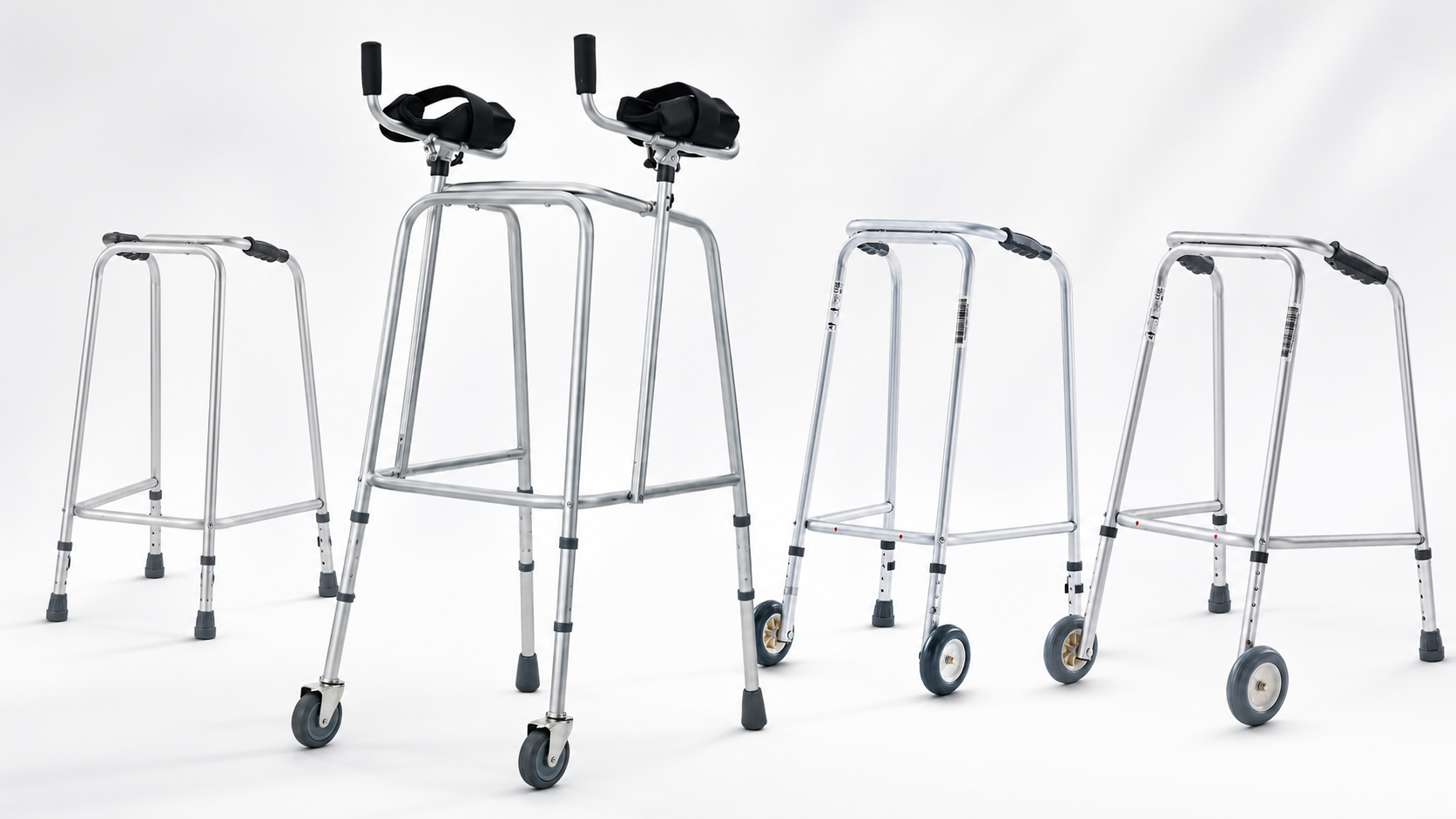
What Is a Zimmer Frame? Types, Uses and Rollator Comparison
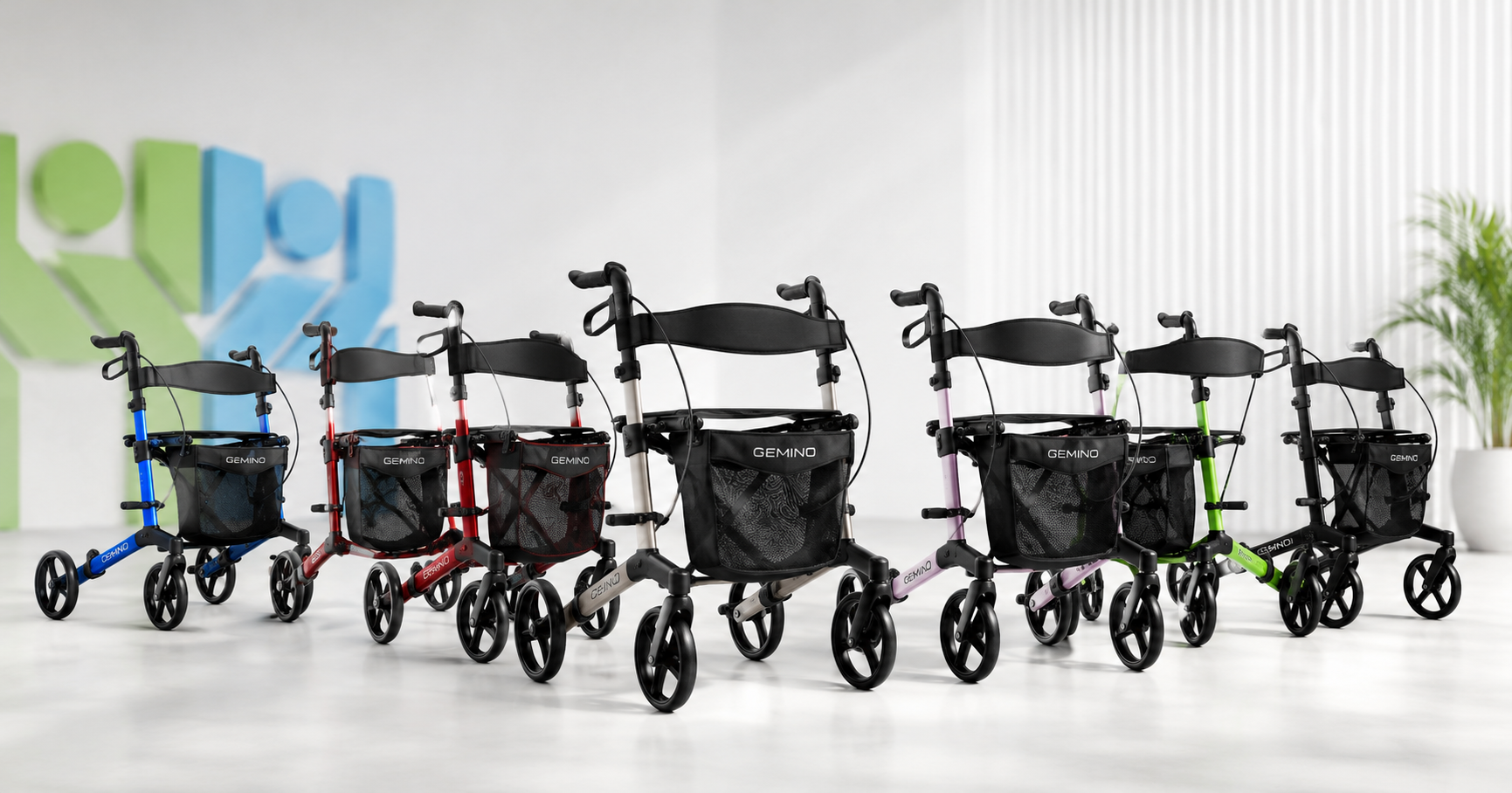
Which Gemino Rollator Is Right for You? A Buyer's Guide