

Pick up and reach without straining.
A grabber is a long handled tool with a trigger at one end and a gripping jaw at the other, so you can pick things up off the floor or reach a high shelf without bending, stretching or climbing. You will hear them called grabbers, grabber sticks, reachers or helping hands — they are all the same tool. Helping Hand has been designing and making them in Britain since 1965, and ours are built specifically for elderly, disabled and post-surgery users rather than as a general household gadget.
Most customers qualify for VAT relief, and UK delivery is free on orders over £15.
Who uses a grabber stick?
A long handled grabber makes the difference between managing at home and needing to ask for help. Ours are most often used by:
- People recovering from a hip or knee replacement, where bending past 90 degrees is off limits during recovery.
- Anyone with arthritis, a weak grip or painful joints, where gripping and twisting is the problem rather than the reach.
- Wheelchair and armchair users who need to reach the floor, a shelf or a dropped item from a seated position.
- People with back pain or limited balance, for whom bending down is what triggers the pain or the fall risk.
- Carers, as a simple way to help someone stay independent with everyday tasks.
How to choose a grabber
- Length — shorter grabbers around 21 to 26 inches are lighter and easier to control one-handed. Longer ones at 30 to 35 inches extend your reach to high shelves and the floor, but take more wrist strength to hold steady. If you will mostly use it seated, shorter is usually better.
- Trigger and grip — a standard trigger suits most people. If your hands are painful or your grip is weak, a whole-hand trigger needs far less force to close the jaw.
- Folding — a folding grabber halves in size to fit a handbag, rucksack or the pocket of a wheelchair, so you have it with you when you are out.
- Gel and cushioned handles — spread pressure across the palm, which matters if you use the grabber many times a day.
- Magnetic tip — useful for keys, coins, pins and hair grips, which are awkward to grip with a jaw alone.
- Rotating jaw — lets you grip an object sideways as well as end-on, which is what you need for a tin on a shelf or a sock on the floor.
Not sure which suits you? Our guide to choosing a grabber stick walks through it in more detail, and 23 ways to use a grabber around the home covers what people actually do with them.
Our grabbers and reachers
Classic range — our original, best-selling grabber:
- Classic PRO Grabber — the everyday long handled grabber, in 26" or 32". From £8.99.
- Classic PRO Folding Grabber — folds in half for a bag, a car or beside a chair. Three lengths. From £14.50.
- Classic MAX Gel Handle Grabber — a pressure-easing gel handle for longer use. From £18.
Handi-Grip range — an easy-pull trigger needing less hand strength:
- Handi-Grip PRO Grabber — easy trigger and secure rubber jaw, in 26" or 32". From £15.50.
- Handi-Grip MINI Grabber — a shorter, lighter grabber ideal from a seated position. £14.50.
- Handi-Grip MAX Grabber — extra reach for high shelves without stretching. From £19.
Arthri-Grip range — for arthritic and weaker hands:
- Arthri-Grip PRO Grabber — an ultra-light whole-hand trigger needing minimal grip strength. From £19.
Frequently asked questions
What is the difference between a grabber and a reacher? Nothing — they are two names for the same tool. "Reacher" is the term used by occupational therapists and in hospital, while most people say grabber, grabber stick or helping hand. You will also see grab stick and pick up stick used for the same thing.
What length grabber do I need? Measure from where you will be sitting or standing to the things you most need to reach. As a rule, 26" suits general use around the home, 32" and above suits high shelves and reaching the floor from a chair, and shorter models are easiest to control if your arms tire quickly.
Can a grabber pick up heavy items? They are designed for everyday objects — post, clothing, tins, a TV remote, a dropped stick. They are not intended for lifting heavy or awkward loads, and each product page gives guidance on what its jaw will hold.
Which grabber is best after a hip replacement? A longer grabber, usually 32", so you can reach your feet and the floor without bending past the limit your surgeon has set. Many people pair one with a sock aid and a long handled shoe horn for dressing.
Can I buy a grabber VAT-free? Yes — if you are disabled or have a long-term illness you can usually buy VAT-free by completing the short declaration at checkout.
Grabbers sit within our wider daily living aids range, alongside dressing aids, sock aids and shoe horns. Not sure which grabber is right? Call our UK team on 01531 635678 or email shop@helping-hand.com — we have been making everyday living aids in Britain since 1965.
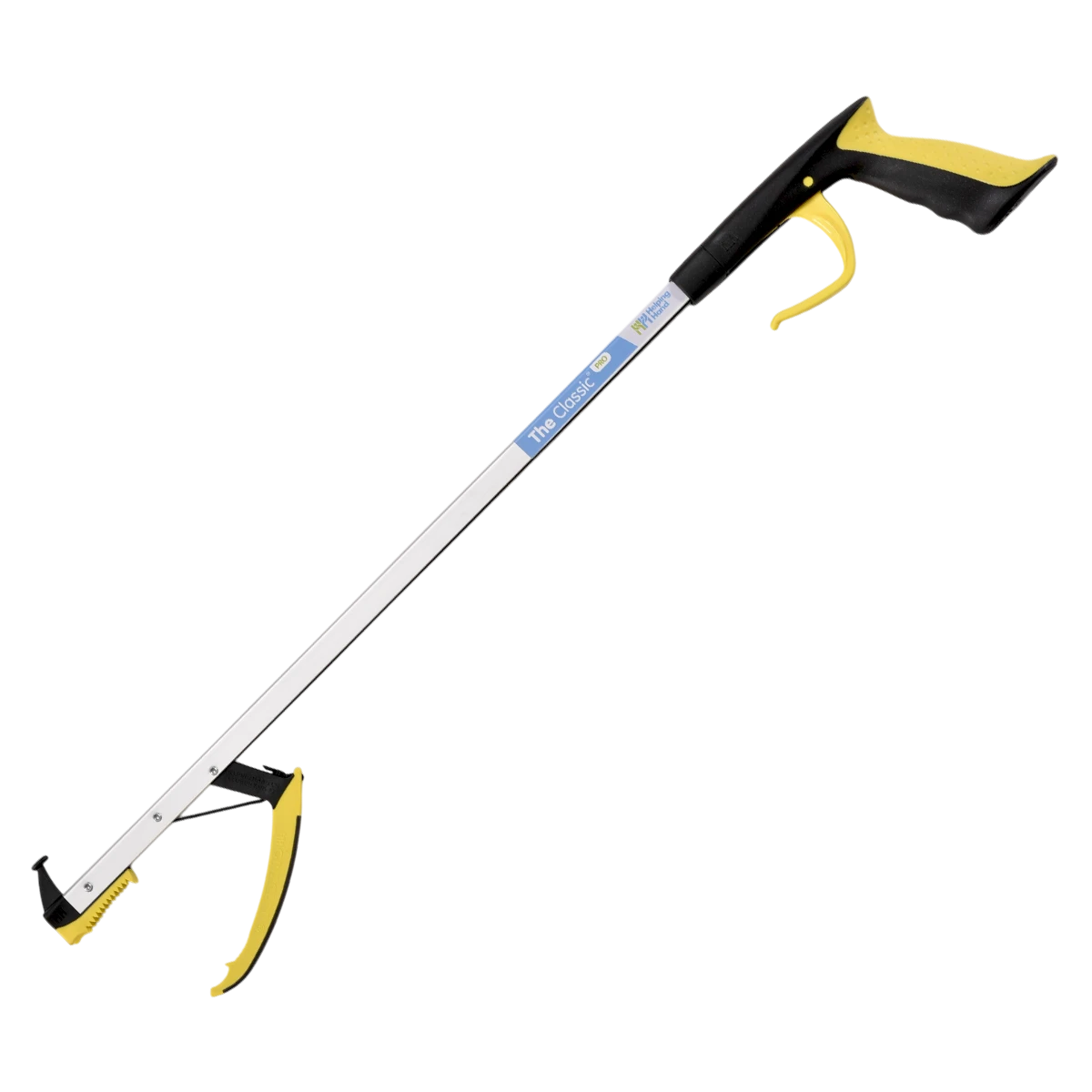
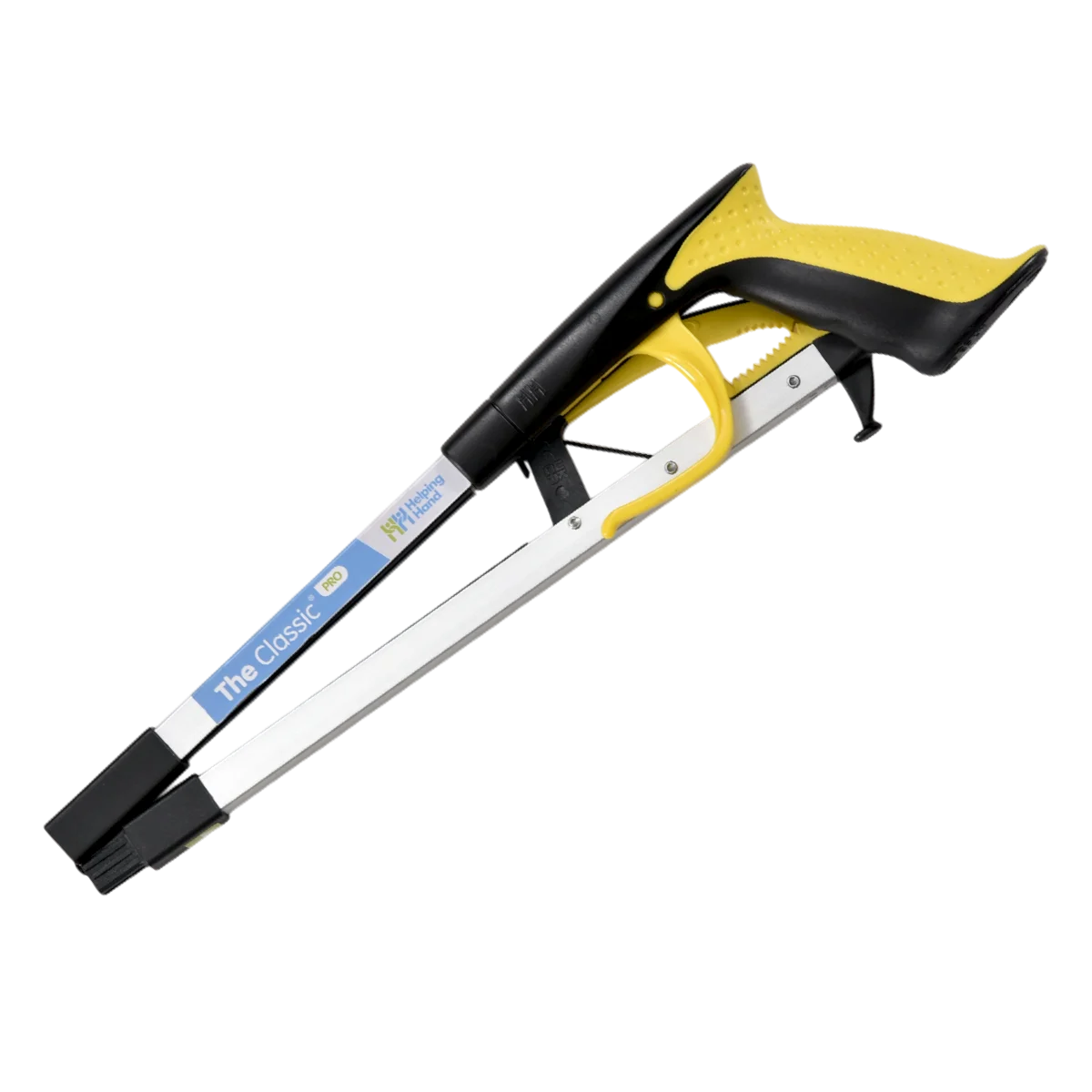
Classic PRO Folding Reacher Grabber
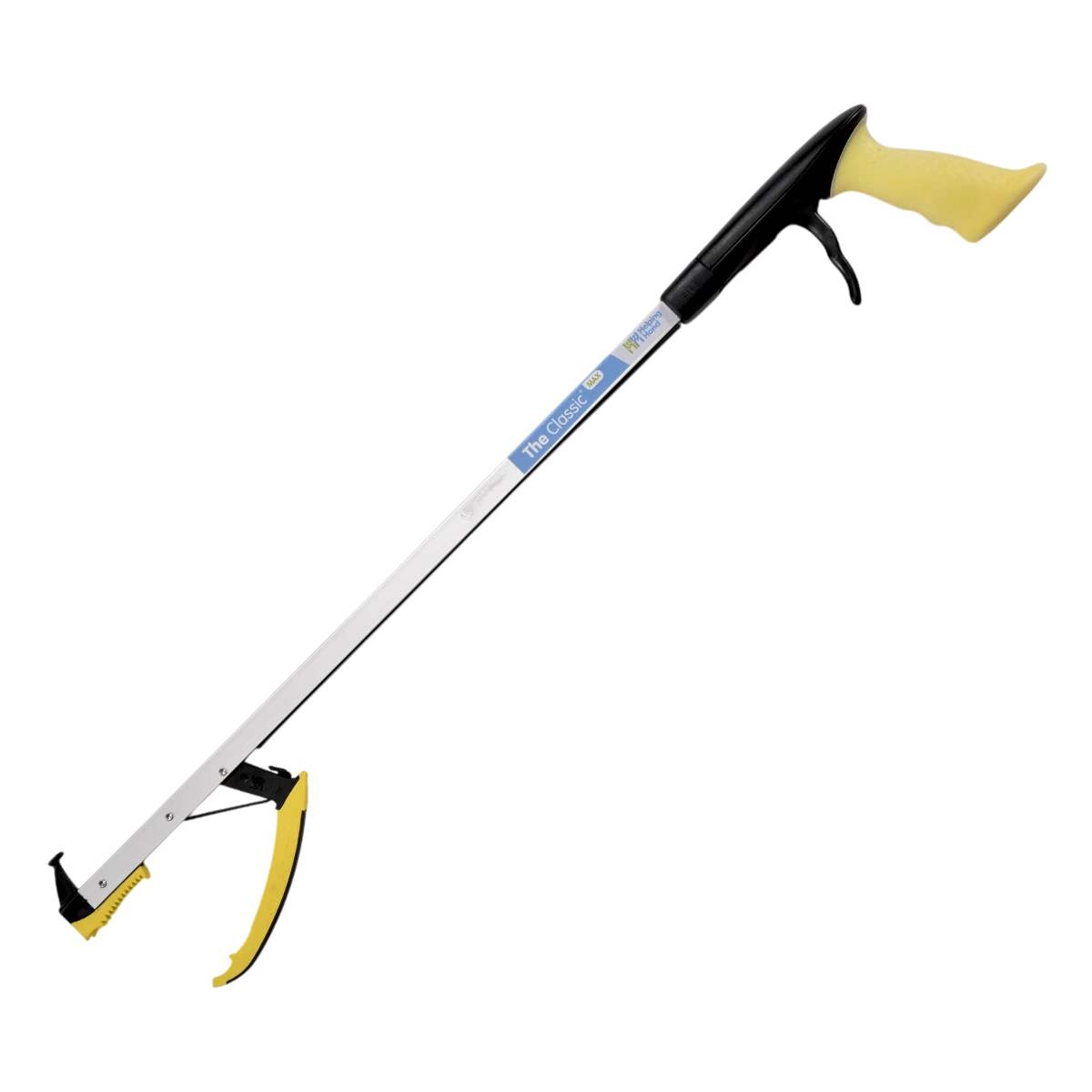
Classic MAX Gel Handle Reacher Grabber
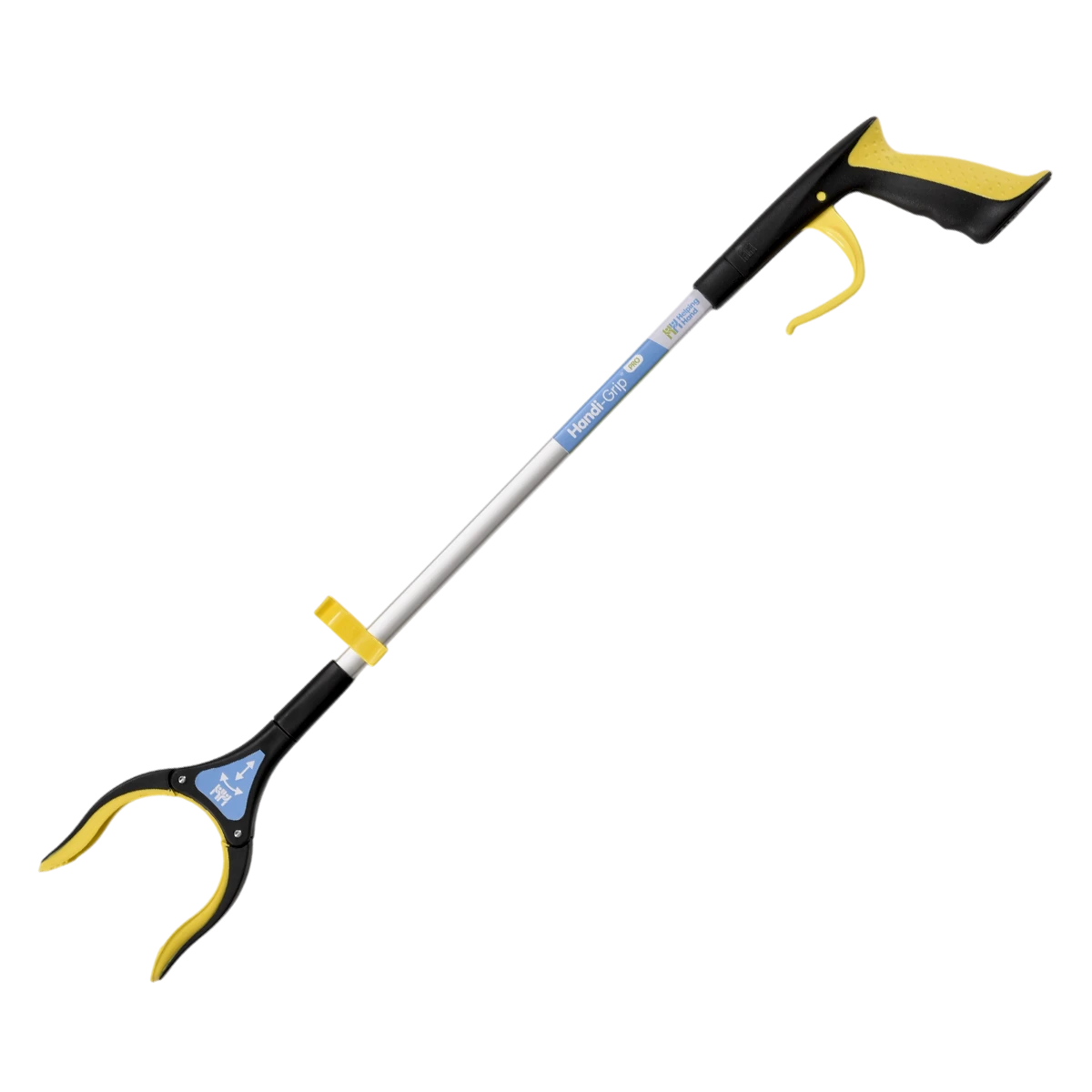
Handi-Grip PRO Reacher Grabber
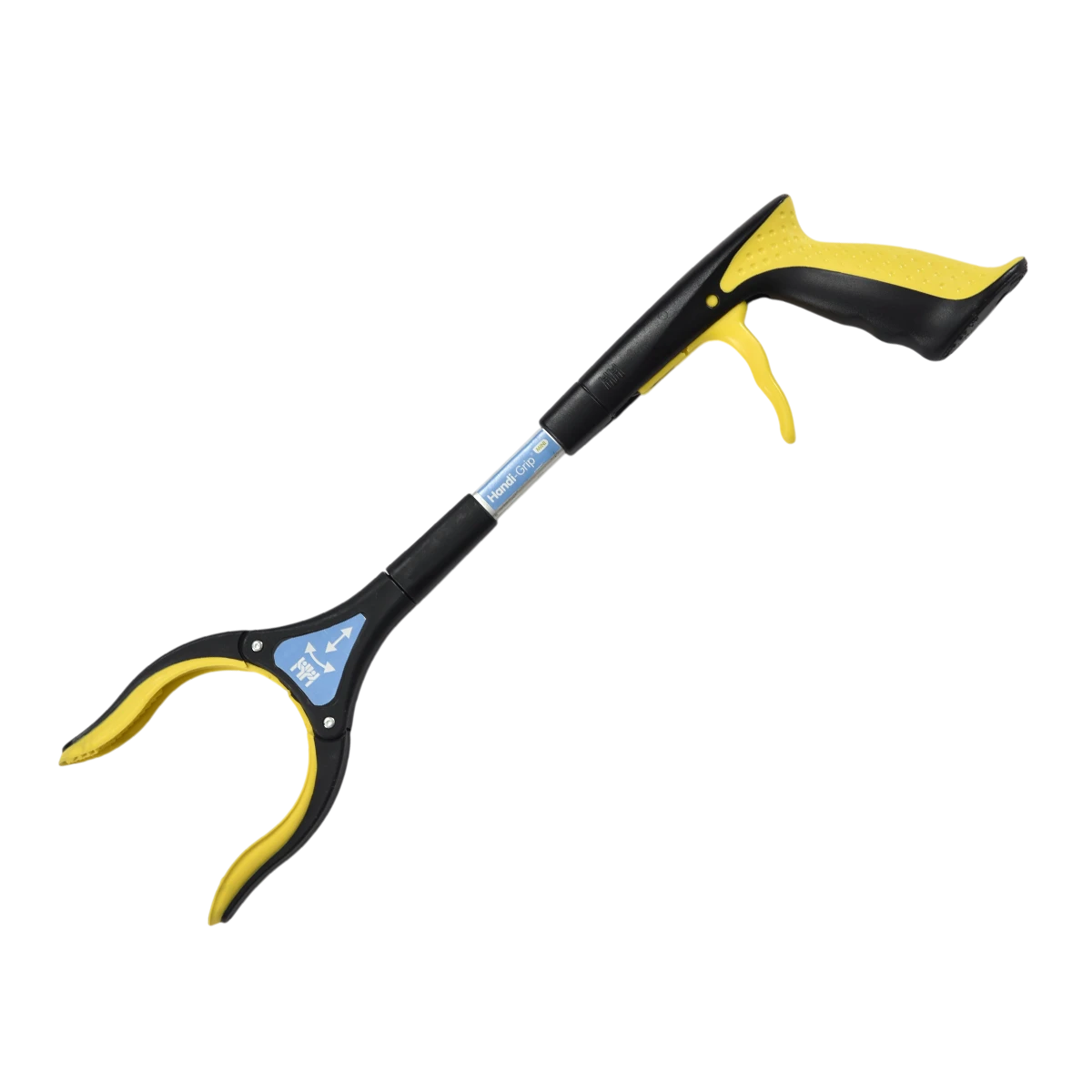
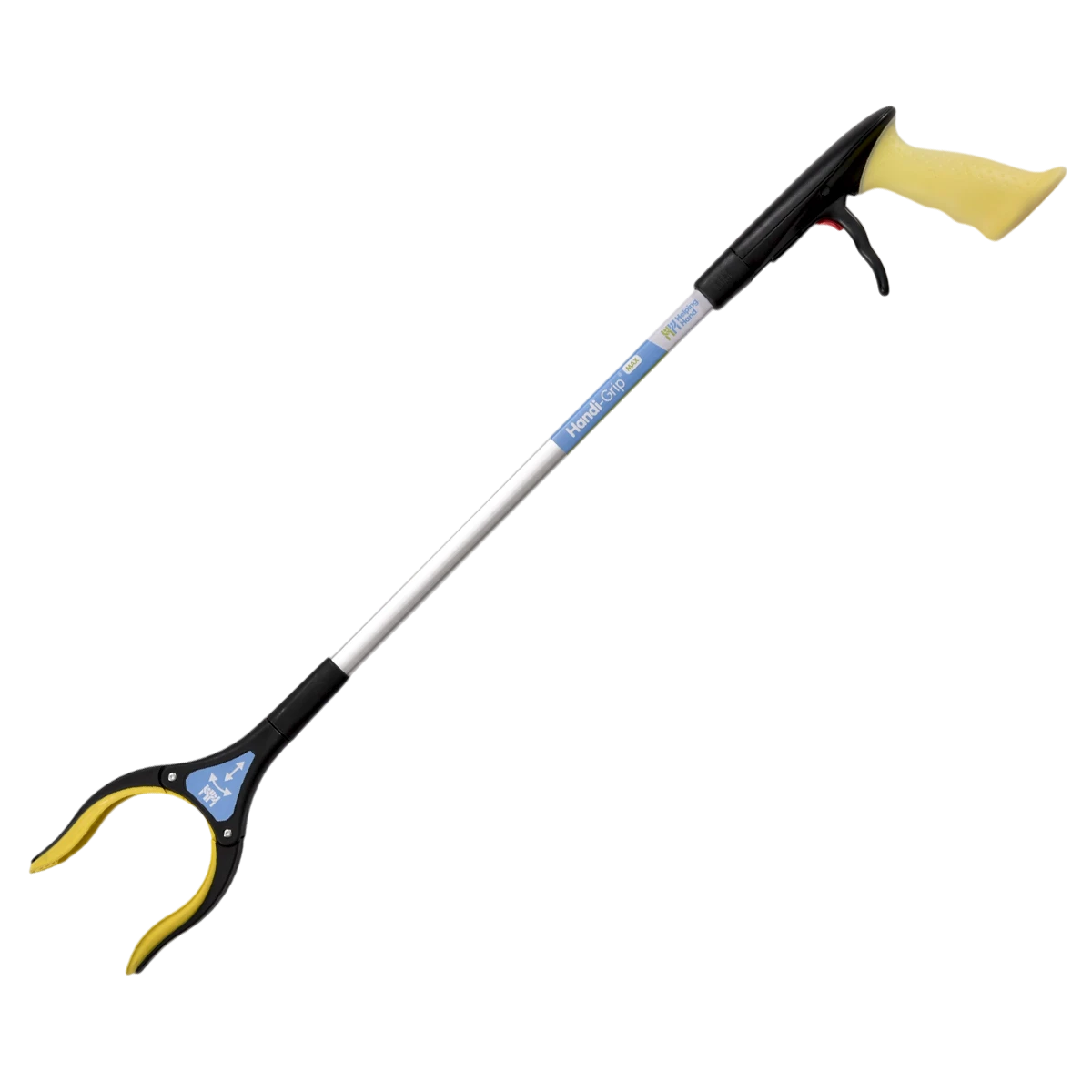
Handi-Grip MAX Reacher Grabber
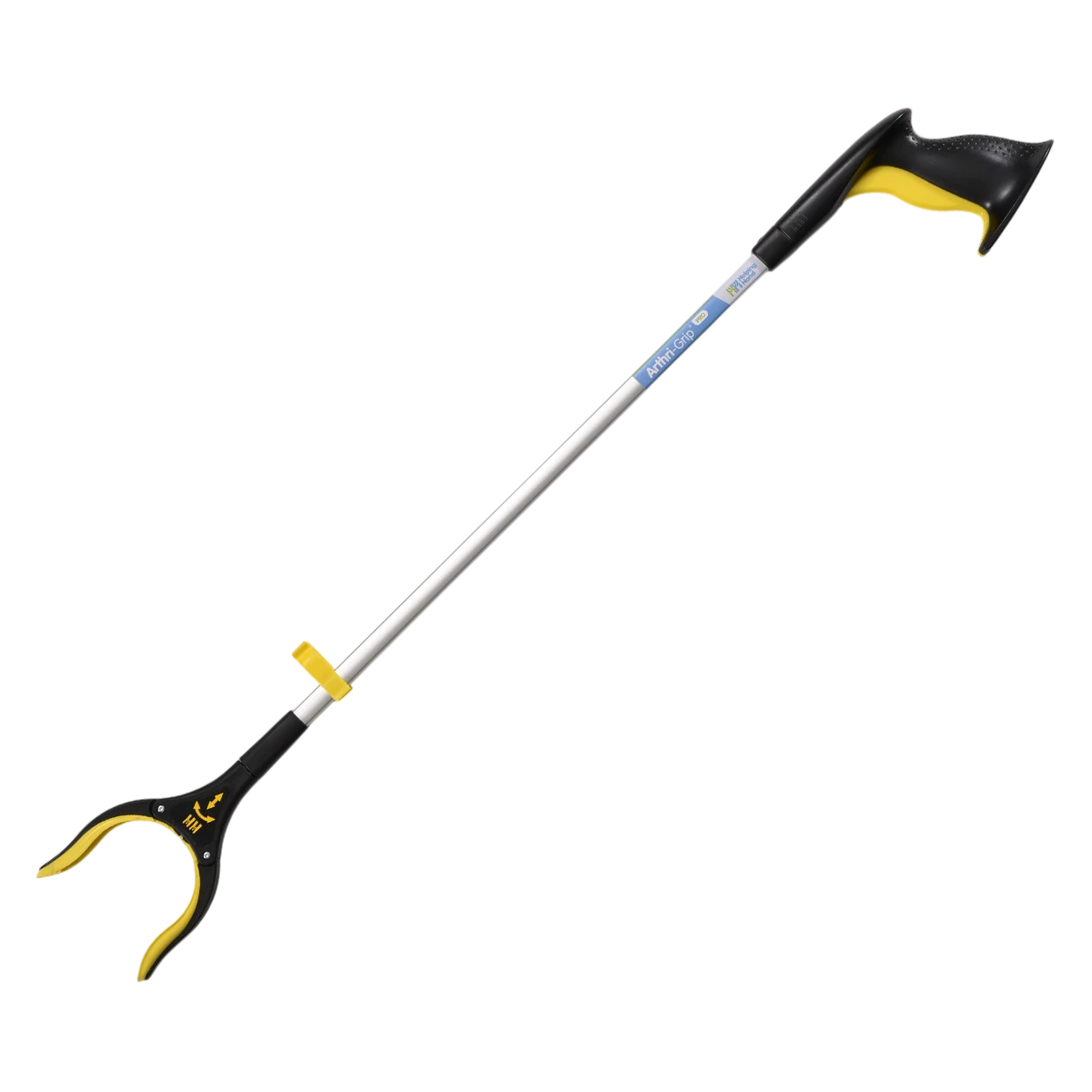
Arthri-Grip PRO Reacher Grabber