

Whether you are recovering from an operation, healing a broken bone or living with a long-term condition, crutches give you the freedom to stay mobile while taking weight off an injured leg. Used correctly they are safe and surprisingly liberating; used incorrectly they can cause sore hands, aching shoulders or even a fall. This guide walks you through fitting, walking, stairs and the common mistakes to avoid.
Everyone's situation is different — how much weight you are allowed to put through your injured leg is decided by your surgeon or physiotherapist. Always follow their specific advice; the guidance below is general and not a substitute for it.
Elbow crutches vs underarm crutches
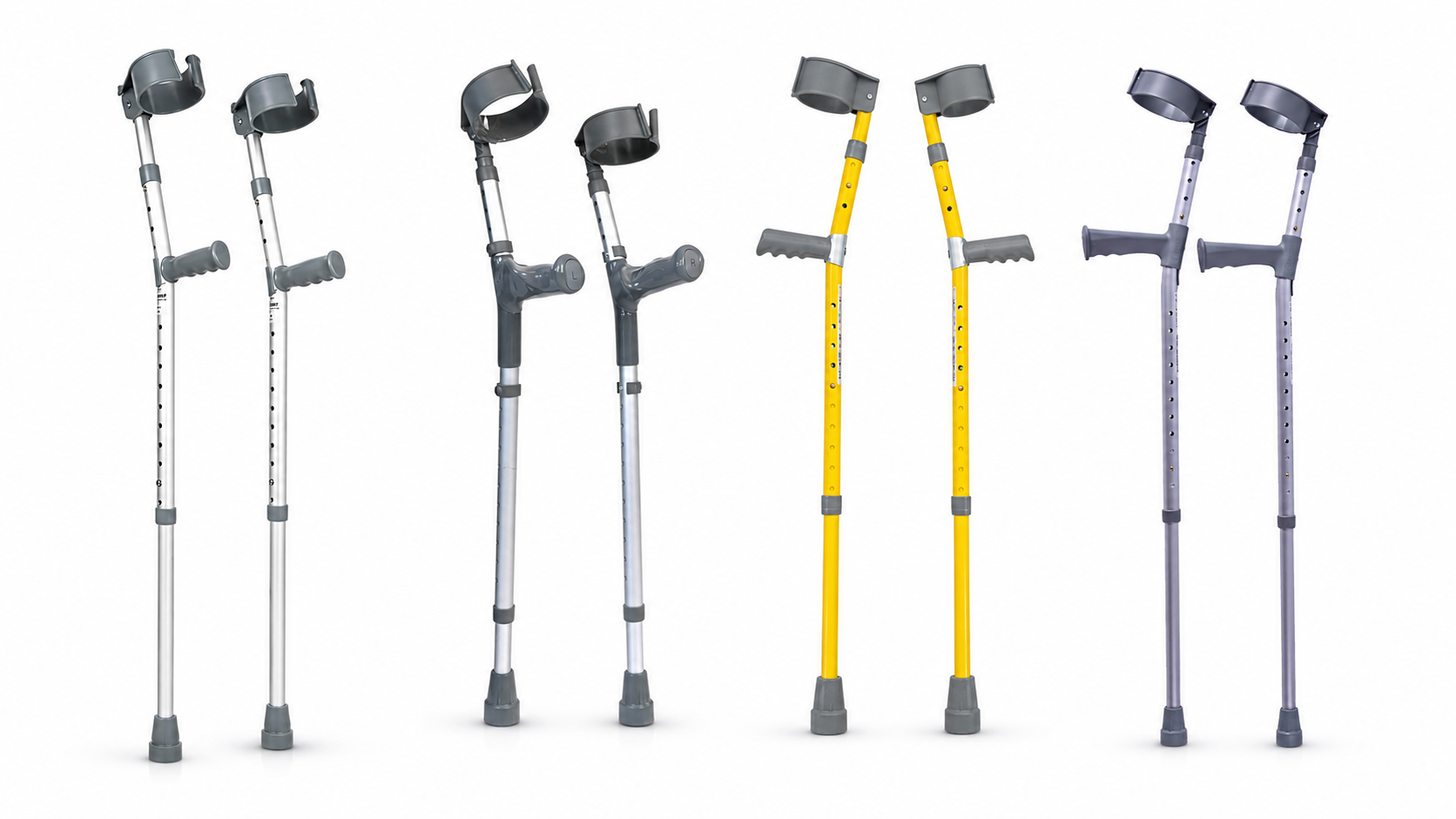
In the UK, the crutches you will almost always be given are elbow crutches (also called forearm crutches). A cuff supports your forearm and you take your weight through a hand grip, which keeps your hands and wrists doing the work rather than your armpits. Underarm (axillary) crutches — the kind often seen in American films — tuck under the arm and are used far less often here, mainly for very short periods. All of Helping Hand's crutches are elbow and forearm crutches, designed and made in Britain.
How to fit your crutches
A good fit is the foundation of comfortable, safe walking. Wearing your normal shoes, stand up tall with your arms relaxed at your sides:
- Hand grip height: set the grip level with the crease of your wrist. When you hold it, your elbow should be bent very slightly — around 15 to 30 degrees.
- Forearm cuff: position it about 2.5cm (1 inch) below the bony point of your elbow. It should hold your forearm securely without pinching.
- Tip position: when standing, each crutch tip should sit about 15cm (6 inches) out to the side of your foot for a stable base.
Check the rubber tips (ferrules) regularly and replace them when the tread wears down — a worn ferrule is one of the most common causes of slips.
How to walk with crutches
The basic technique depends on whether you are allowed to put any weight through your injured leg, which your physiotherapist will tell you.
If you cannot put weight on the injured leg (non-weight-bearing):
- Move both crutches forward a comfortable distance — roughly one stride.
- Take your weight through your hands and arms, not your armpits.
- Swing your good leg forward to, or just past, the crutches, keeping the injured leg off the ground.
- Steady yourself, then repeat. Look ahead, not down at your feet.
If you can put some weight on the injured leg (partial weight-bearing):
- Move both crutches and your injured leg forward together.
- Put the allowed amount of weight through the injured leg and the crutches.
- Step through with your good leg, keeping your steps small and even.
Going up and down stairs
Stairs feel daunting at first, but a simple rule makes them manageable: "up with the good, down with the bad."
- Going up: lead with your good leg onto the step first, then bring the crutches and your injured leg up to meet it.
- Going down: lead with the crutches and your injured leg down first, then step down with your good leg.
- Use the handrail if there is one. Hold both crutches together in the hand on the opposite side (or hand one to a helper) and take the rail with the other — one secure crutch plus a rail is safer than two wobbling crutches.
- Take one step at a time and never rush.
Sitting down and standing up
Back up until you feel the chair or bed against the back of your legs. Take both crutches out of your forearms and hold them together in one hand. Reach back for the armrest or seat with your free hand and lower yourself slowly, keeping your injured leg out in front. To stand, reverse it: shuffle to the edge, push up from the seat and your good leg, then slip the crutches back on once you are steady.
Staying safe and comfortable
- Carry your weight through your hands, not your underarms — leaning on the cuffs or armpits can cause nerve irritation and shoulder pain.
- Wear supportive, flat, non-slip shoes on both feet.
- Clear your floors of rugs, cables and clutter, and mop up spills quickly.
- Keep your hands free with a small rucksack, a cross-body bag or a bag clipped to the crutch.
- Rest when you need to — crutches are tiring at first, but your arms and shoulders strengthen over the first week or two.
- Take extra care on wet, icy or polished floors.
Common mistakes to avoid
- Crutches set too tall or too short — recheck the fit if your hands go numb or your shoulders ache.
- Looking down at your feet instead of ahead, which throws off your balance.
- Taking strides that are too big.
- Leaning on worn ferrules — replace them as soon as the tread goes.
Choosing the right crutches
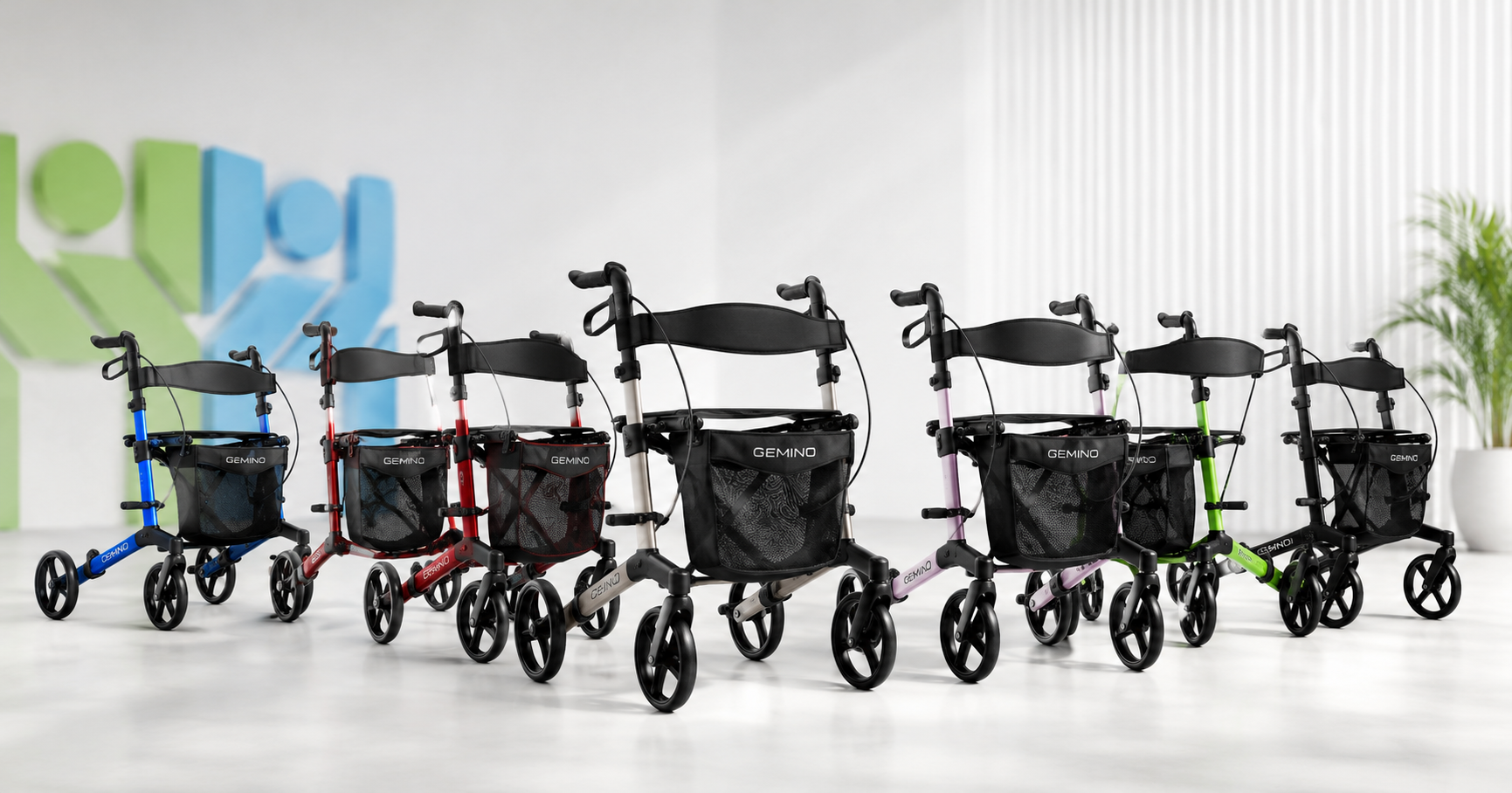
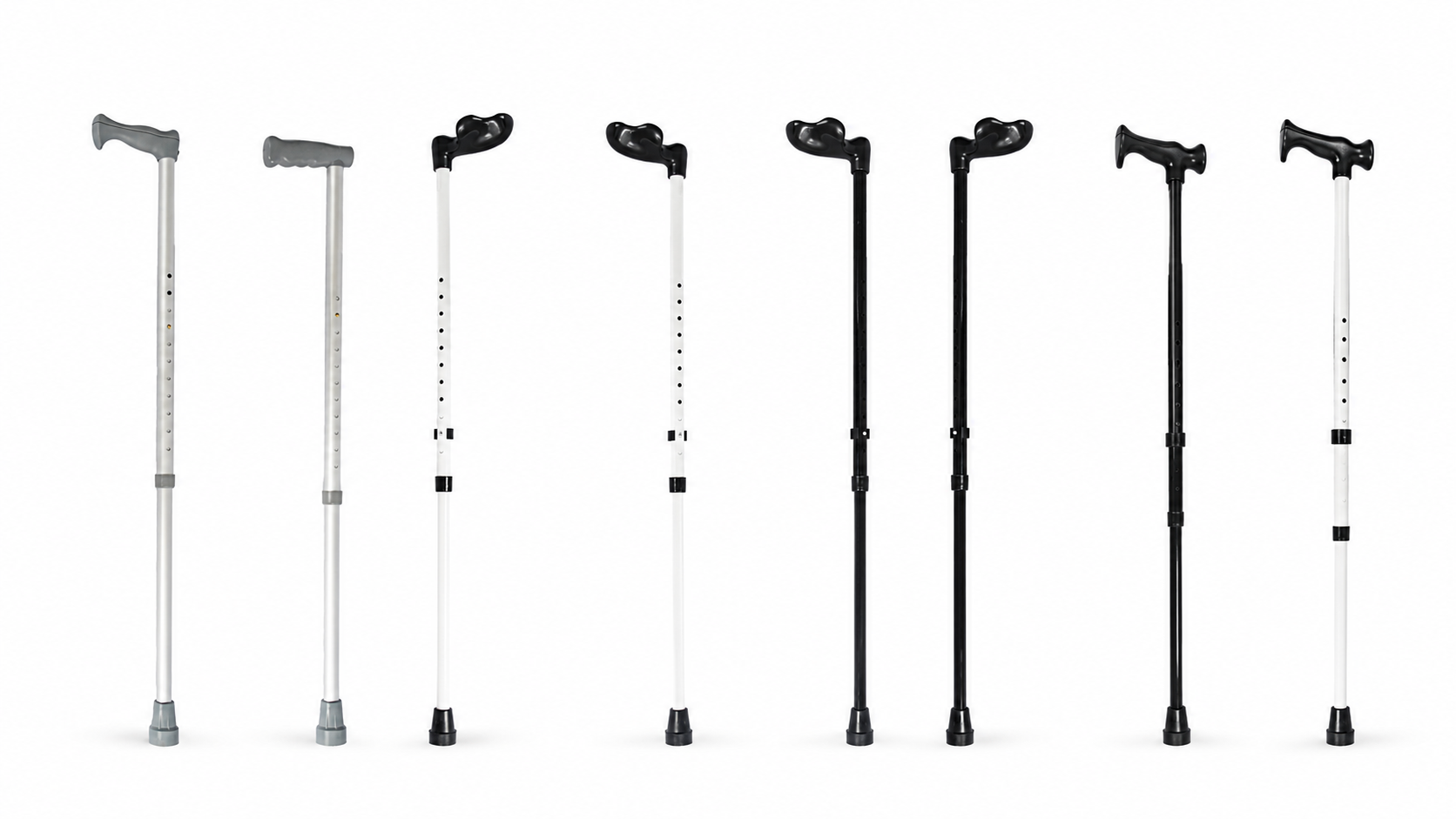
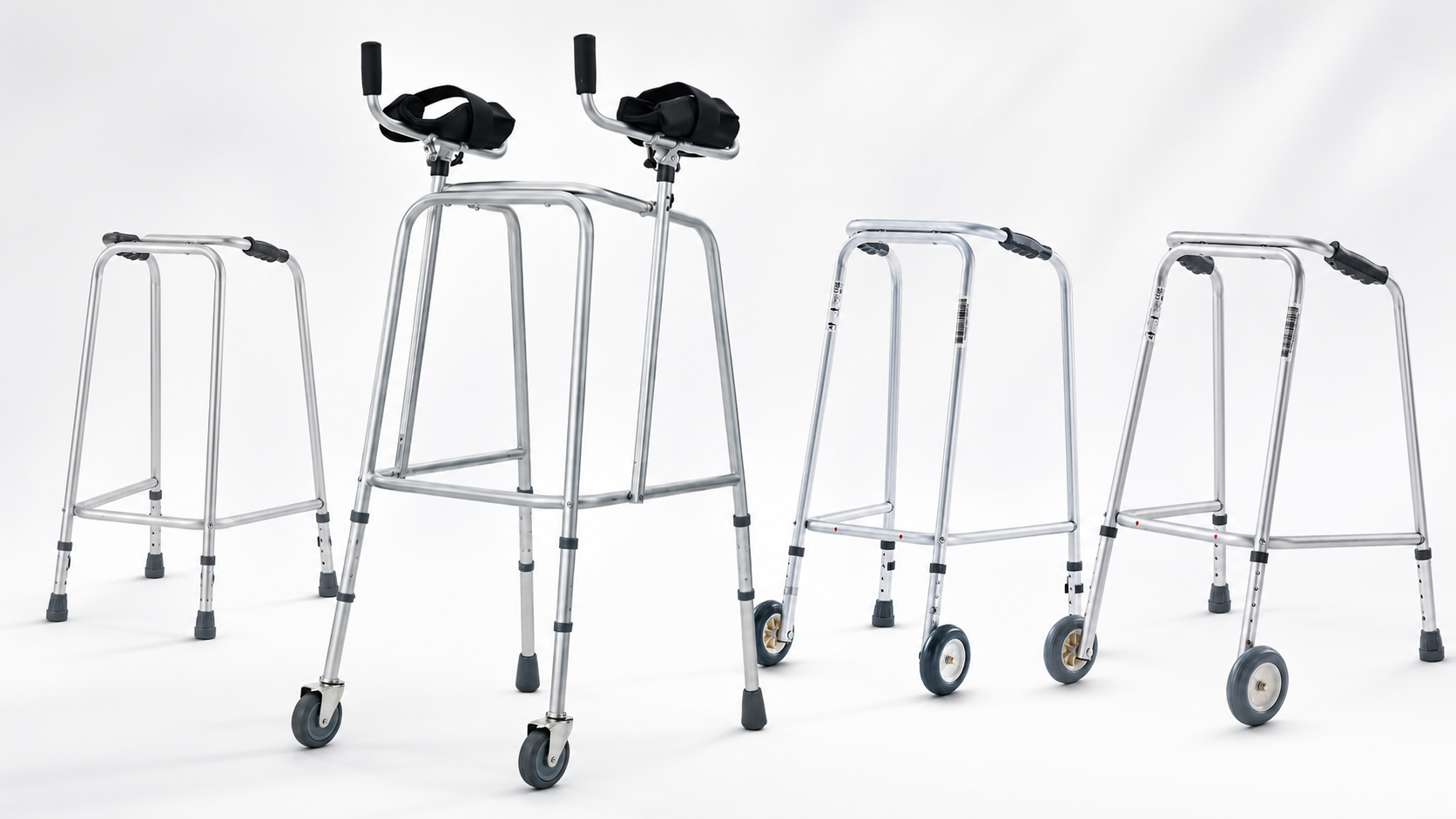
If you are buying your own, look for lightweight, fully adjustable elbow crutches with a comfortable, pressure-spreading grip — especially if you will be using them for several weeks or have arthritis or a weaker grip. You can compare the different types on our crutches page, and you may also want to look at walking sticks or a walking frame as you recover and need less support. As a British manufacturer, we have been making mobility aids since 1965 — if you would like help choosing, call our team on 01531 635678 or email shop@helping-hand.com.
Our crutches
All fully adjustable and made in Britain, eligible for VAT relief with free UK delivery on orders over £15.
 Adjustable Elbow CrutchSoft PVC handle — four sizes, sold singly£15.75View
 Double Adjustable — ErgonomicPressure-spreading grip, adjusts at leg and handle£15.75View
 Lightweight ForearmLightest option — extra forearm supportFrom £10.50View
 Children's Elbow CrutchesSized and weighted for younger users£11.25View
 Replacement FerrulesWorn tips slip — latex free, five sizesFrom 90pView
If walking with crutches is painful, your hands or feet feel numb or tingly, or you feel unsteady, speak to your physiotherapist or GP.
Share:
Independence in everyday life
What Is a Zimmer Frame? Types, Uses and Rollator Comparison